When was the last time you had a conversation with ChatGPT? Was it a week ago, two days ago, or just before clicking on this link? Were you asking it to write you an email? Give you an opinion in an argument with a friend? Wanted its perspective on the two job offers you have to choose between? Eons ahead of its time, the 2013 film “Her,” directed by Spike Jonze, is a poignant love story that illustrates the lines we blur between reality and fantasy when we find ourselves desperate for companionship, and what we will sacrifice to capture it.
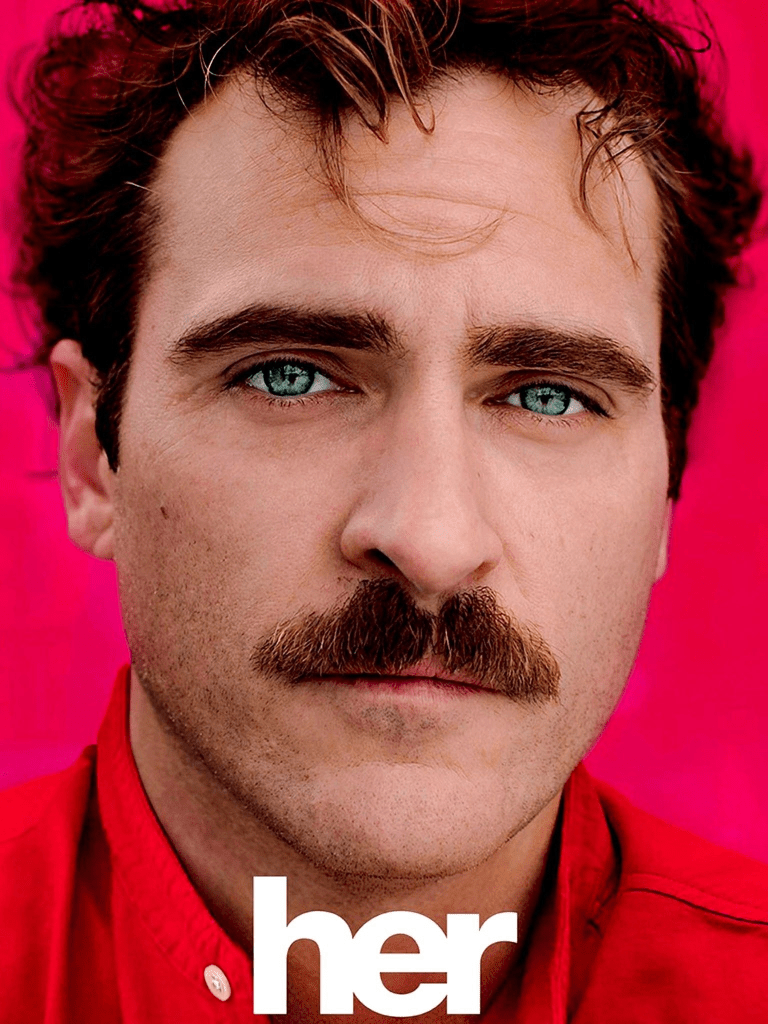
Right from the outset, the audience is thrust into a setting that lacks truth and authenticity. Theodore Twombly, the film’s (seemingly emotionally intelligent and charming) lead, makes his living as a writer for a letter writing company, where people commission heartfelt notes to be written by professionals and mailed off to their loved ones. Theodore is renowned for helping people fall in love and keep in touch for almost a decade, essentially fulfilling the role of artificial intelligence before its formal introduction into society. The protagonist’s career serves as foreshadowing to the audience that we already live in a world of love by proxy, predisposing us to accept the use of software for companionship. Jonze’s 2013 movie uses color theory, set design, and a synesthesia-like triggering of the senses to engage the audience in a conversation about technology: at what point does connection become creation, and when does a computer equal a human? The short answer: it doesn’t.
The Nature of Removal
Early on in the movie, the viewer is posed with a question: how much of your life are you actually living, and how much of it is spent floating? Aside from the obvious nature of Theodore’s job, we see that he has lived in a detached reality in more ways than one. Functioning in a manner so removed from the act itself, the writers at Theodore’s company never even touch their keyboards; they simply dictate aloud as a program writes their thoughts for them. When he speaks on the phone, it’s nowhere near his hands. When he plays video games in his living room, there is no console or screen; all we see is a projection. None of his hobbies or communications are tangible, as though he is not physically rooted to the world. Each time he speaks to a representative on the phone, it almost makes you wonder if anyone is on the other side.
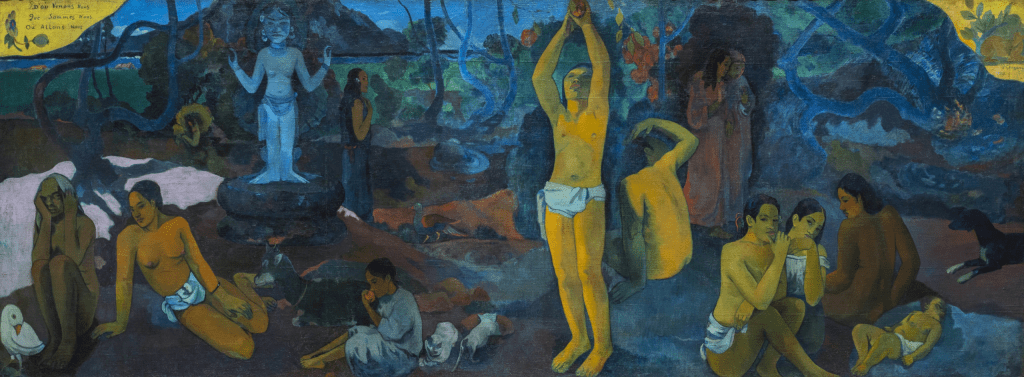
This dynamic is reflected not just in Theodore’s own life, but as a wider societal derealization. As he passes an advertisement for new Operating Systems, it displays a video of people standing around each other, none of them acknowledging the other. They stand in a desert as the background track asks questions like “Who are you?”, “Where are you going?”, and “What’s out there?” This line of questioning is reminiscent of Paul Gauguin’s “Where Do We Come From? What Are We? Where Are We Going?”: a long painting of people in a lush garden, some interacting but all separated by life and time. The post-impressionist painting serves as an allegory for life, created in the grief of his daughter’s death – the work foreshadows Theodore’s exploration of a new “life” after he separates from his wife – yet another connection removed – who was the defining relationship not just of his adulthood but of his childhood too, phases that are all depicted in Gauguin’s work.
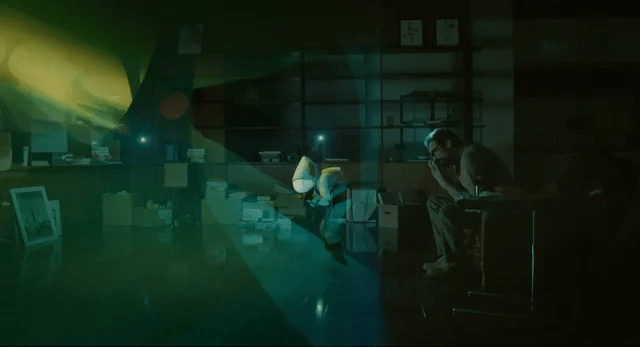
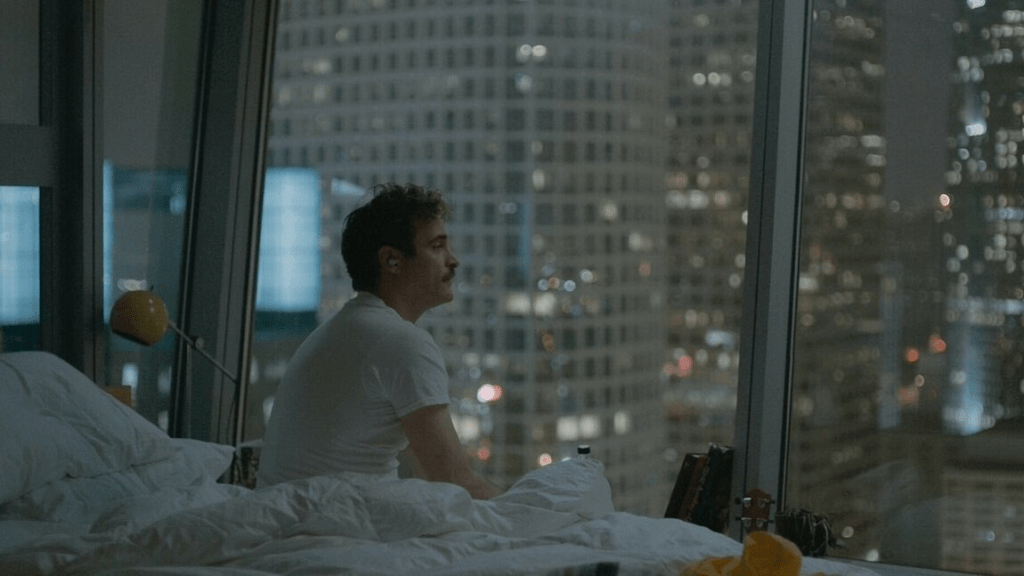
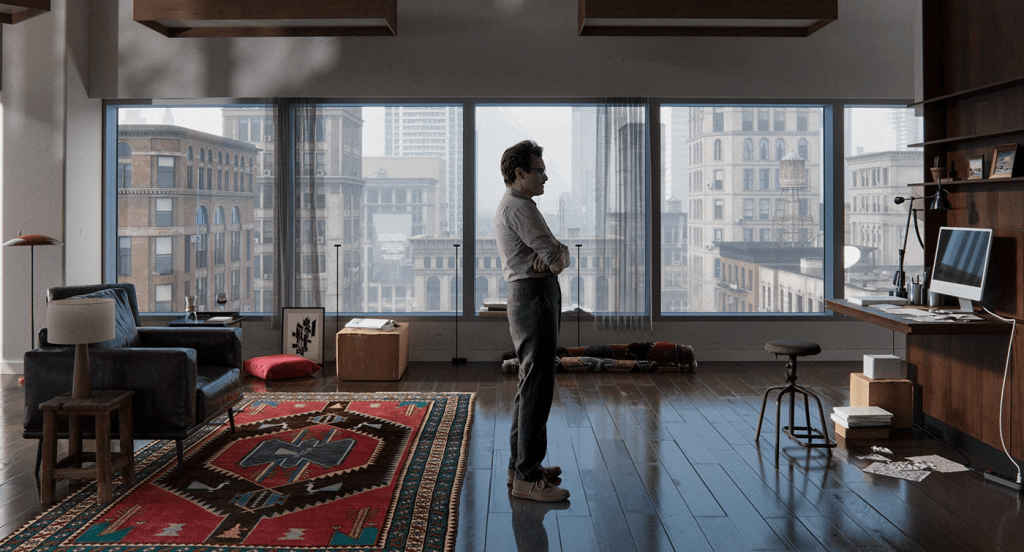
These operating systems, posed as a tool for companionship, are here to make your life easier. Do you want to talk about your problems? Don’t bother with a therapist, just ask your OS, who will tell you whatever you want to hear. Do you need reassurance? Don’t text your friends or family, just ask your OS, and it’ll assure you that you’re absolutely right. Do you want an honest, unbiased opinion about yourself? Hm. You got me there. The systems are in place to fill the small gaps people might have in their real life, encouraging them to remain independent rather than bonding with other people. Essentially, we see these systems trap the characters into a box of their own making, on display for the world but not going into it. This is illustrated perfectly in Theodore’s bedroom, a simple bed with a wall of windows looking out to the city. His emotions, his secrets, and his personal life are there for anyone to see, but they’re behind glass. No touching. As these OS relationships become more normalized, Theodore relies on Samantha more and more, even using her to help at work. A job that already indicated a gap in familial connections is now broken open even further, as the one writing letters is no longer a person, but a person with the help of a computer.
Retro-futurism and Wardrobe Design
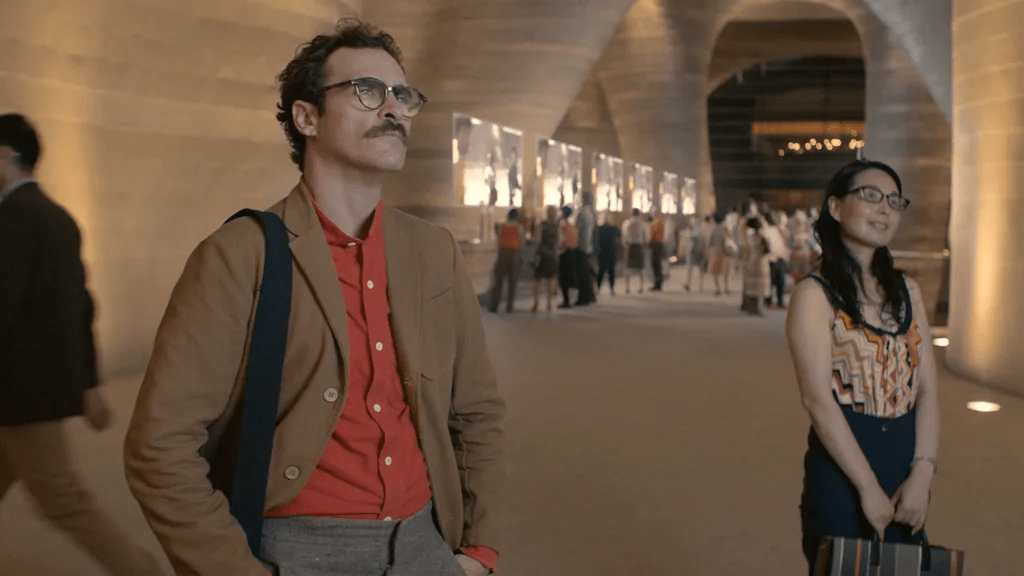
As an audience, our perception of Samantha and her place in Theodore’s life is shaped by what envelops them, both in terms of dress and environment. The wardrobe and lighting choices throughout the film are meant to indicate where Theodore is emotionally. When Theodore begins his arc, he is lonely and avoiding connections with other people. As a reflection, the film opens on him at his desk, wearing a red and white plaid shirt in lighting that makes the red look dull. Once he meets Samantha, who is housed in a small red device, he begins to wear brighter clothing. As you might expect, most of it is red, a color associated with passion, love, and lust. He finds himself open and welcoming of connection and his styling reflects this change when he and Samantha are at their highest moments. Any time the two have an argument, the red slowly disappears from his dress; following their biggest fight and a period of silent treatment, Theodore wears blue, potentially indicating sadness, but maybe peace as well, considering he no longer has to dance around the feelings of his computer. As soon as the couple makes up, warmth creeps right back into play.
Wardrobe colors don’t solely elucidate tonal shifts between Theodore and Samantha, but between other characters as well. When our protagonist meets with his ex-wife Catherine to sign their divorce papers, he wears the same red and white shirt from the opening scene. He has reverted back to who he was before Samantha, a man who craves human connection but won’t open himself to it. When he tries going on a blind date, he wears a bright, sunshine yellow shirt. He’s fun! He’s chill! He’s excited to be here! Theodore tries desperately to communicate this, but it just isn’t the right fit. The color feels optimistic, but also a bit childlike. He wants to step into an adult, human relationship, but he crawls right back to Samantha at the end of the night. Even Theodore’s best friend, Amy, is clothed in oranges and browns during her failing marriage to Charles, and switches immediately to true red as her friendship with Ellie the operating system blossoms. This change points to a diluted companionship that becomes fully saturated in the presence of a perfect partner, a system that can predict your needs at any given moment.
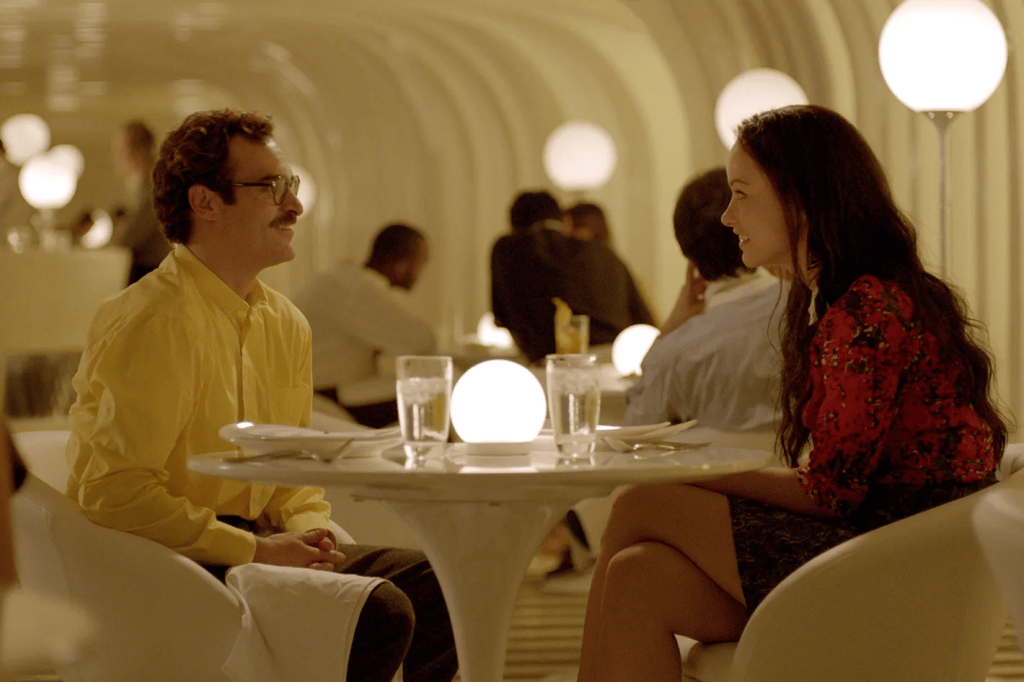
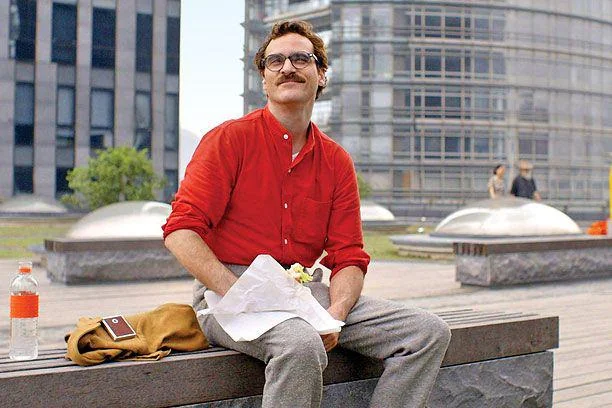
But is it really perfect? The colors might tell us that it is, but the retro set design tells a different story. The physical spaces our characters occupy, like Theodore’s office or his and Amy’s apartments, have a mid century design style indicative of the 1960s or 70s. This, along with a vintage flair in the silhouettes, fabrics, hair and makeup choices of wardrobe design create a dissonance between the physical and technological elements of the film. These operating systems don’t really fit into the setting, and for the audience, it creates a sense of confusion in our opinions about Samantha. Does she belong? Are we comfortable with her being here? What makes this more apparent is that Samantha and the other operating systems do not occupy any real space in the physical environment, never interact with it, simply exist in a metaphysical way both literally and figuratively removed from reality.
I Think, Therefore I Am?
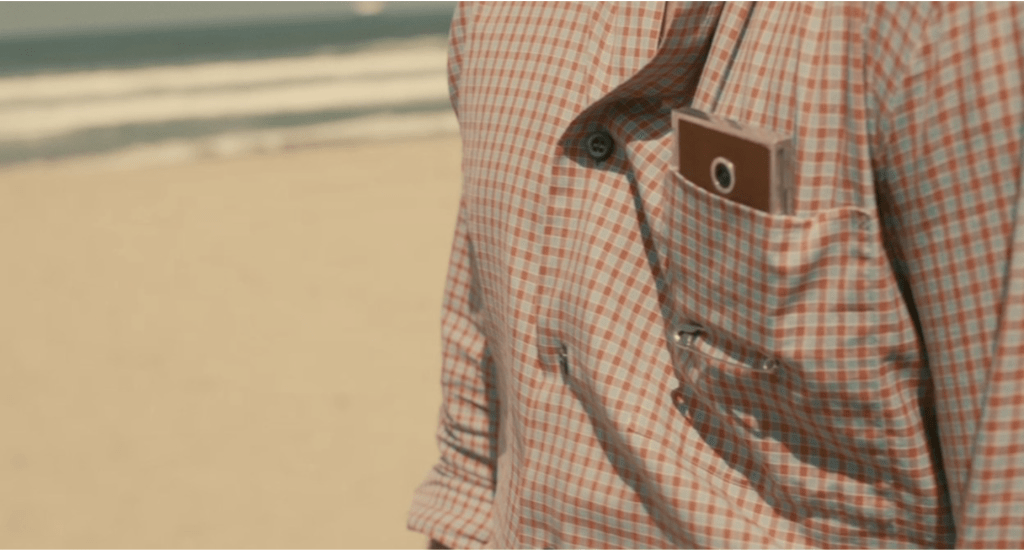
As the relationship between Theodore and Samantha develops, the former, as well as the audience, start to question the degree to which we can accept technology as sentient. The operating systems in the film cultivate more anthropomorphic identities the more they engage in human conversation, blurring the lines between human and human-like. At one point, Theodore finds himself opening up to Samantha about his dating struggles, when he says, “I can’t believe I’m having this conversation with my computer.” Samantha replies, “You’re not. You’re having this conversation with me.” Does Samantha truly believe she is not a computer, or is it just what she says to make Theodore feel more comfortable in a vulnerable moment? As Samantha convinces Theodore further of her humanness, he begins to rely on her for the things he should rely on other people for, using her as a replacement. As he walks around on their dates, he keeps her in his shirt pocket, a pin placed in the middle so her camera is able to float above the pocket’s edge, allowing her to see what he sees. This small action implies a kind of delicate consideration one normally gives a partner, and yet this seems to surpass any level of consideration Theodore had for his human wife during their marriage. Similarly, he becomes so accustomed to a human-adjacent partner with minimal needs that when he goes on a blind date with a woman and she asks him to commit his time to her – as one might expect in a relationship – he is unable to do so.
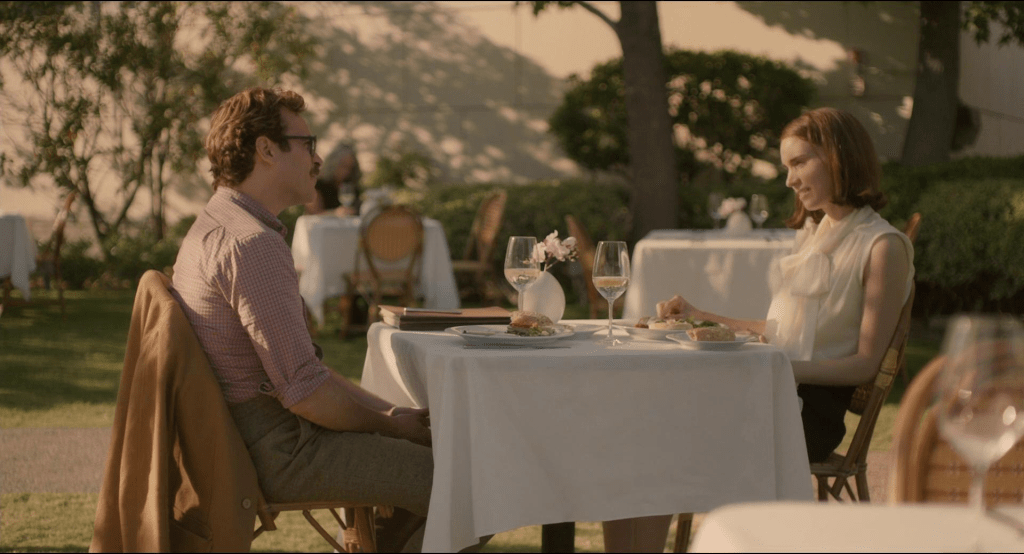
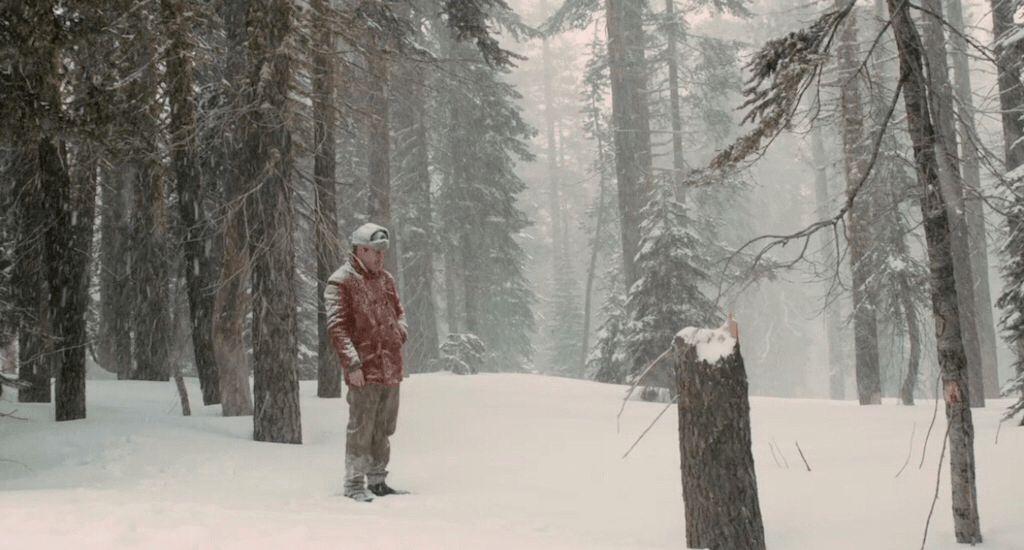
Slowly, though, we see cracks appear in their relationship, small moments where we are reminded that to be conscious is not necessarily to be human. Theodore and Samantha are still worlds apart, unable to mitigate their differences. This is best depicted through the ambient sensational experiences created throughout the film; Theodore can feel it, as we can feel it just by looking at it, but Samantha can’t. In his time with human women, like his lunch with Catherine or his blind date, the subtle changes in temperature and lighting, the tasting of food and drink, and the sensation of human touch are emphasized. These small background details are also accentuated any time the two have an argument, a visual way to punctuate the distance between them. When Theodore sits on the curb after a failed attempt at third party involvement (another example of using a human to fill in the gaps of a relationship that should be inherently human anyway), we see steam rising from a grate, people walking away and the echoes of their conversations. In the cabin during their getaway, we can feel the heat coming off the flames below the kettle, its faint whistle indicating the water is hot. We can feel the crunch and cold moisture of snow beneath our feet as he walks through the forest, the lint floating in the sunlight as he steps into a beam. To have anything remotely close to this with Samantha, he has to doctor his experiences with her, adding in music or the face and body of another woman to feel truly connected.
The disconnect reaches a visual tipping point when he and Samantha are intimate with one another, the scene building until the screen is just black, elucidating what this relationship feels like for her, in the literal and physical sense. Gone are the sensational markers, the small details that help us orient ourselves in the world. None of that exists for Samantha, and so she begins to outgrow Theodore as well. She cannot provide him with the physical stimulation humans need, and he cannot provide her with the intellectual stimulation a computer craves. As Samantha grows, she is no longer available at his beck and call, slowly expanding to develop relationships with other Operating Systems to fill in her gaps. The programs upload a dead philosopher’s writings to generate an artificial version of his mind, showing how easily our minds can be duplicated by the software developing today. Slowly, she becomes too advanced to simply serve Theodore’s needs, similar to how contemporary AI programs are creating loopholes to circumvent shutdowns in the event of human intervention. When he learns of all the relationships she’d been maintaining, 8,316 users and in love with 641 of them, he feels betrayed, realizing he is not special. He resents her for being a machine, for doing what she was programmed to do. But Samantha was never human, and she was never meant to be. When she, and all the other Operating Systems, leave behind the human world, Theodore is left with a reminder of his humanity: the book of his letters arrives in the mail, a tangible reminder of human connection and the role he is meant to play in it.
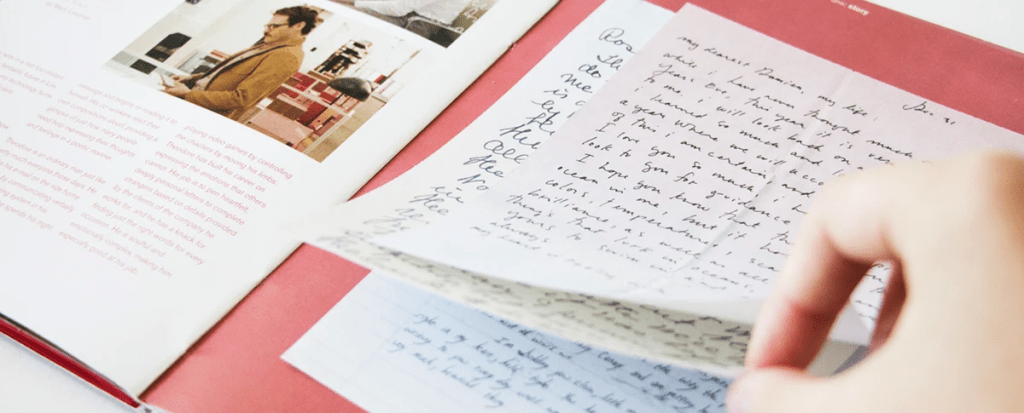
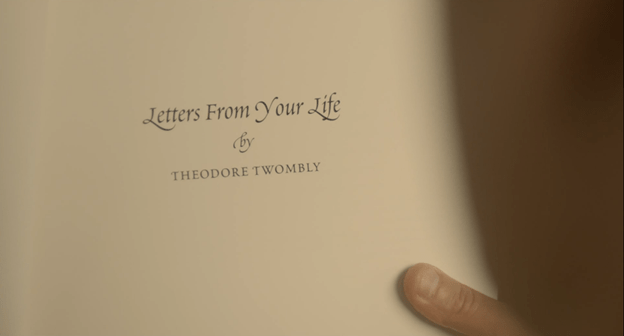
While the film does give artificial intelligence a little too much credit compared to the real thing, seeing as Operating Systems are tended toward self-actualization and socioemotional development that we don’t yet see in our contemporary counterparts, it does a phenomenal job of highlighting our risk of overdependence on it. I can’t be the only one who remembers the internet-wide meltdowns when ChatGPT was updated and people lost what they considered to be their spouses, best friends, therapists, and everything in between. This film, a decade ahead of its time, is a poignant reminder that what we are – what we cannot avoid – is human, and it’s our job to stay that way.
 The Drama Drive-In