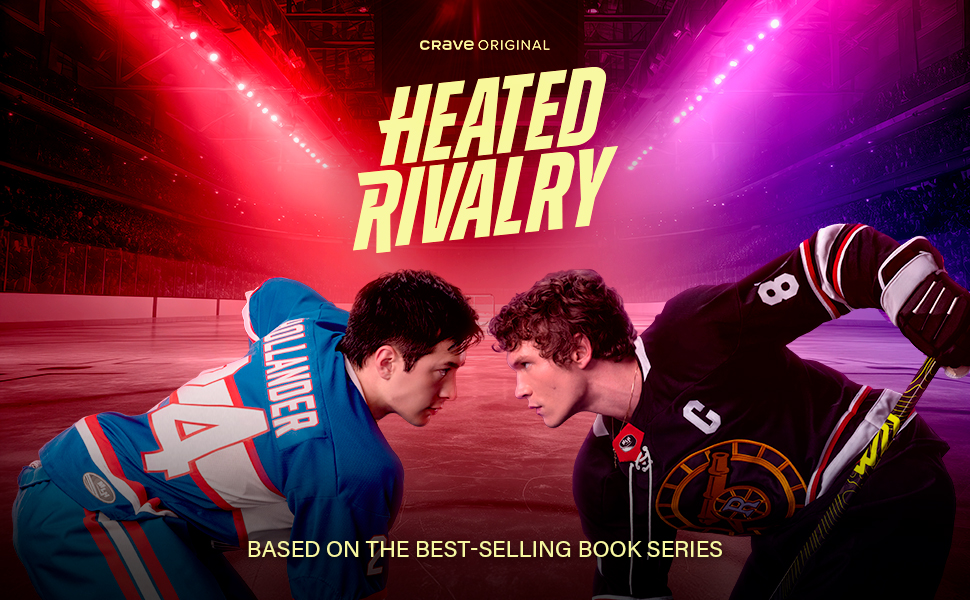
Let me set the scene: it’s 2016, I am thirteen years old, and I am in my dark bedroom watching “Yuri on Ice.” Outside this room, there are questions about the upcoming presidential election, the rise of cryptocurrency, and America’s future. But here, in my rose gold iPhone 6, I hold the magic of Wattpad fanfiction, YouTube makeup tutorials, and the comfort of gay skaters. Fast forward nearly 10 years: it’s 2026, I am twenty-two years old, and I sit on my living room couch watching “Heated Rivalry.” Outside my apartment, political turmoil swells and Americans everywhere watch with bated breath to see where our country goes from here. Here, in my baby pink iPhone 15, I hold the magic of firsthand video evidence, a constant stream of global news, and – oddly enough – the comfort of gay skaters. In the face of rising fascism, environmentally destructive AI becoming increasingly undetectable, and class conscious elitism fatigue, Americans crave a resurgence of simpler times. “Heated Rivalry,” based on Rachel Reid’s best selling book series “Game Changers,” reflects a renaissance of 2016 trends and social networks, ushering in a period of escapism rooted in pop culture.
Culture of the 2010s
Most of the series is set in the mid 2010s, with episodes 2-6 spanning from 2014 to 2017. The culture of this era permeates every aspect of production, from the phone choices, to the celebrity gossip, to the drop-crotch Rick Owens sweatpants Ilya wears to make Shane a tuna melt in episode 4. In a more meta way, however, the show’s biggest callback to 2016 culture is in its mass awakening of fangirl culture.
Ten years ago, fangirls dominated social networks like Tumblr, Twitter, Wattpad, and Ao3 with edits, fanfiction and updates for their fandom of choice. Specifically, fangirls searched for and extracted LGBTQ+ stories in every piece of content consumed, seeing a lack of representation explicitly on screen. Being a fangirl was a way of life; I’d know, seeing as I spent all of middle school reading Pentatonix fanfiction till I couldn’t see straight. This culture of a life dedicated to loving and creating art is what led to “Heated Rivalry” in the first place: the “Game Changers” series started as MCU fanfiction – Steven Rogers and Bucky Barnes, to be exact.
What might be the silliest parallel between 2016 and 2026 is the existence of another one-season sensation about a cocky Russian man and an awkward Japanese man falling in love in the rink. “Yuri on Ice,” a show that people still beg Studio MAPPA to rehash, defined a generation of Anime watchers for a time. It perfectly mirrors an era desperate for queer representation in the wake of the Marriage Equality Act, something Americans fear can be undone any minute.
As a nation, Summer 2016 had us full of hope. We had a woman on the presidential ballot and social justice in the air. Overall, there seemed to be more excitement for our diverse future and all the possibilities ahead. As we barrel further from that dream, the people crave escape. It’s no question as to why 2010s culture has come back full force: songs like “Lush Life” by Zara Larsson back in Spotify’s Top 10, makeup influencers posting their 2016 cut creases with a matte liquid lip, Triangl bikinis coming back out for summer, the list goes on. Pop culture has become a Narnia portal to a world where we are not afraid every day of what tomorrow brings.
Budget Friendly
Ironically, one of the most alluring elements of the show, leading to its widespread positive reception, is its humble budget. Jacob Tierney, creator and showrunner, opted to produce the series through Crave, a smaller Canadian streaming service. In an effort to promote the entertainment industry and LGBTQ+ media, the Canadian government’s Media Fund contributed in part to the funding of “Heated Rivalry” to the tune of $3.1 million, and the remainder came from the studio itself.
Where most studios are pushing for massive blockbuster budgets per episode, some upwards of $400 million (“Stranger Things,” we’re looking at you), Tierney traded cash for the heart of the story. Large studios mean large changes, focused on maximizing profit rather than delivering art – hence why fans of “Stranger Things” since 2016, myself included, felt jipped by an ending that felt out of touch with its audience.
Another benefit of the hit series’ limited funds was the feel of intimacy generated by production that felt casual and not overly polished. Fans online reference the cozy set design and smaller cast as feeling more personal and approachable, which contributes to the overall viewing experience. As we face a rise in AI that seems to be less and less obvious, running under the radar of our film and television, audiences are desperate for truly human entertainment. Content that generally feels imperfect – and therefore untouched by AI – reflects what we loved watching from Youtubers, internet celebrities, and indie media in the 2010s.
Face Fatigue
The greatest success of “Heated Rivalry,” at least according to the entire internet, was its genius casting. Hudson Williams and Connor Storrie have been praised from every angle for their stellar performances as Shane Hollander and Ilya Rosanov, respectively. These two actors, both of whom were restaurant servers up until receiving the calls that changed their lives, should serve as a huge sign to Hollywood’s filmmakers: go back to casting nobodies.
The last seven years in film and television have been dominated by many of the same young actors. Each new movie trailer inevitably features Timothee Chalamet, Zendaya, Glen Powell, and the like. This isn’t to say that these actors are untalented; on the contrary, their talent is what got them their big breaks. However, audiences are vocally tired of seeing the same faces in everything. They want something new to fawn over. They want someone else to get their big break too.
In a phase of pop culture where audiences are growing sick of the elites, these fresh faces plucked right out of the Old Spaghetti Factory are just what the doctor ordered. These two gorgeous, novel men have captured the needs of the current zeitgeist, pumping our social economy with thousands of new accounts, edits, and fangirl obsession.
The feeling of discovering something new is unbeatable, and it’s something we got a lot more of in the 2010s when social media and YouTube made the whole world accessible without needing agents or casting directors first. We don’t just want to know our celebrities, we want to relate to them.
Final Thoughts
Whether or not “Heated Rivalry” continues to succeed in its next season the way it did in its debut, only time will tell. What we do know, however, is that the show’s explosion into the mainstream is a clear indication of social and artistic patterns pulling the world back into the comfy, cozy bubble of 2016. Now we’ll just have to see if the energetic spirit of the era – a spirit defined by defiance, justice, and a will to fight for what we believe – decides to join us too. If you ask me, I think we’re well on our way.
 The Drama Drive-In